
Travis Resident Lookup Record Checks
One name can appear in very different kinds of Travis records. The useful question is not whether a database returns the name, but what the returned record actually establishes. A property account can establish an owner-to-parcel connection. A voter result can establish registration status. A court result can establish a party or case reference. Each record has its own keeper, date range, and privacy limits, so a resident lookup should retain the distinction instead of converting every hit into a claim of current residence.
| Record | What It Confirms | Where | Access |
|---|---|---|---|
| Property account | Owner, parcel situs, mailing address, account, and legal description | Travis Central Appraisal District | Public appraisal search |
| Voter status | Registration and county or VUID context | Texas My Voter Portal | Individual lookup with protected fields suppressed |
| Court index | Party, case number, file date, type, status, and court location | Travis County Odyssey | Public index; files and images vary |
| Vital index | Limited event details such as name, date, county, and sex | Texas DSHS Vital Statistics | Index and certificate access differ |
| State credential or entity filing | License or organization role and status | Texas TDLR verification | Statewide context, not residence proof |
Begin with the record that uses the information already known. An address can be checked against TCAD, but its mailing address and owner fields are not occupancy fields. A name with a court reference should begin in the relevant court index. A dated event may call for a vital index or a qualified requester route. Keep the source date beside each result, because an older connection can be accurate for its record date without describing the present.
Verify a Travis Resident Across Records
A sound resident lookup uses two independent identifiers. Anchor the name to an address or parcel first, then compare a record type that answers a different question. TCAD offers owner name, property address, account number, and DBA modes, but the appraisal district specifically distinguishes a property situs from a mailing address. A deed can connect a person to a transfer, while a voter record speaks only to registration. This separation is the best defense against merging two Travis people with similar names.
- Normalize the full name, including middle initials, suffixes, spelling variants, and a known county or date.
- Use TCAD or a recorded-instrument lead to identify a parcel, account, legal description, or dated ownership connection. Do not label the owner as the current occupant.
- Run the name in the proper court index and compare the party label, case number, file date, type, status, and court location.
- Where appropriate, compare the result with a voter status record, a DSHS index, a dated directory, or an official state credential before treating the identity as confirmed.
- Request a certified copy only from the custodian when an official certified document is required.
- Docket
- A docket is the court's running case record, usually showing filings, settings, status, and other case activity.
- Index and image
- An index points to a record through searchable fields. An image is the scanned document, which may be unavailable, redacted, or incomplete online.
- Certified copy
- A certified copy is issued by the record custodian with its official certification. A search result or ordinary image is not the same thing.
Note: Preserve conflicting dates and addresses rather than choosing the newest-looking result without checking its source and record scope.
Travis Court Lookup Through Odyssey
Odyssey Smart Search is the main county-level name-and-number starting point for the County Clerk, District Clerk, and Probate Court locations. Its required main field is labeled “Enter a Record Number or Name in Last, First Middle Suffix Format.” The guide allows a defendant, plaintiff, attorney, judge, or company name, so the party role matters. Exact last-name-first formatting helps avoid a weak name-only match. Advanced filtering and the separate hearing search narrow the result after the basic search.
| Odyssey field or control | How it is used |
|---|---|
| Record Number or Name | Required text field for a record number or a name in Last, First Middle Suffix format. |
| Location | Choose All Locations, County Clerk, District Clerk, or Probate Court. |
| Advanced Filtering Options | Optional controls for narrowing a basic name or number query. |
| Search Hearings | Optional date-range search for hearings. |
| Results | Sort or filter using Style/Defendant, File Date, Type, and Status. |
An Odyssey result is a docket or index lead. The documented result inventory includes party or style, record number, file date, case type, status, and location. A hearing view can add date, setting, floor or room, and status. Document or image access changes with division, date, redaction, and case type. Sealed, juvenile, adoption, mental-health, expunged, and other protected records may not appear in full.
Travis Court Records by Jurisdiction
The Travis County Law Library separates court research by keeper. The District Clerk handles civil, family, and felony records. The County Clerk handles county civil, probate, and misdemeanor matters. Justice courts, Austin Municipal Court, and federal courts are separate layers. County Clerk online data is strongest from June 1986 for civil, July 1992 for probate, and January 1981 for misdemeanor indexes. The District Clerk identifies free online family and civil records from 2006 and criminal records from 2008.
The District Clerk case-information portal is shown below. Its division coverage should be checked before relying on a no-result, especially for an older file. For a correct but older case, use the appropriate clerk counter, a written copy request, microfilm or Archives where applicable, or a request for an existing record. Municipal cases use a different city route, and federal cases belong in PACER or the federal clerk system.
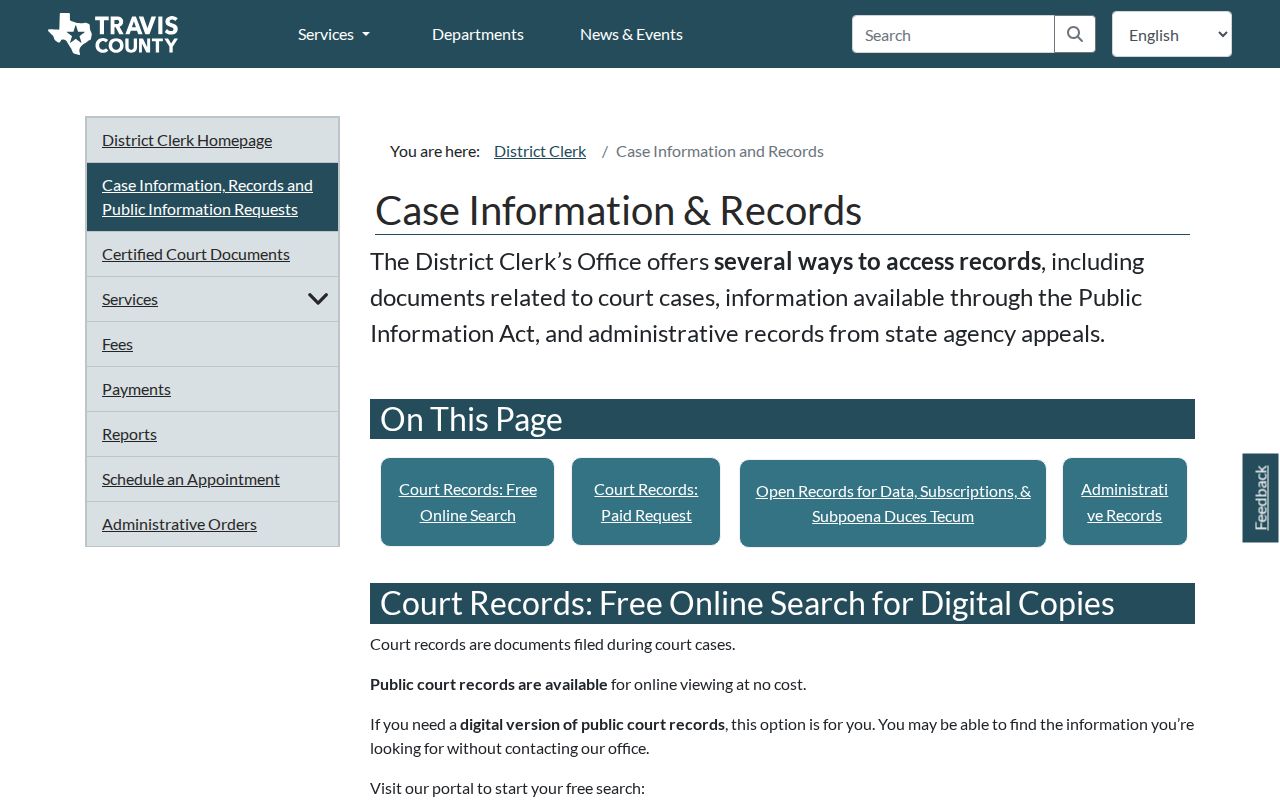
The District Clerk screen is useful for separating district-level court coverage from the County Clerk and Probate layers in Odyssey.
The Austin Municipal Court case search asks for last name plus date of birth or driver-license information and handles juvenile matters with restrictions. Its judicial-record request form accepts case, document, certification, and related details by the court's stated process. This is a city court record, not a substitute for a county or district court search.
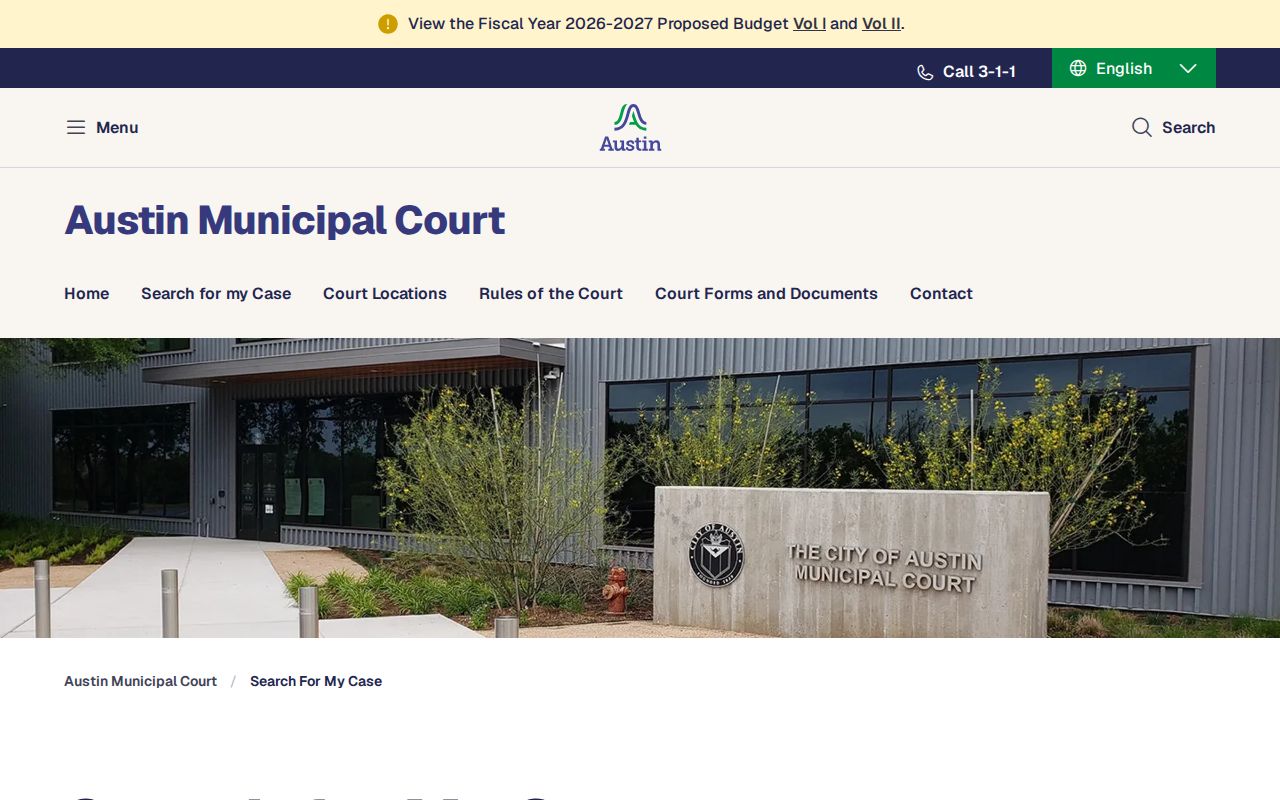
Use the city search only after confirming that the matter belongs to Austin Municipal Court rather than another Travis court level.
Note: A public register of actions can show a case party and history without giving access to every pleading, exhibit, or certified document.
Travis Voter Lookup Limits
Texas My Voter Portal provides an individual status check, not a Travis household list. The public route supports a VUID, a Texas driver-license number when it was supplied for registration, or a first-and-last-name search. Current portal guidance can also use county, date of birth, and ZIP to distinguish a person. Confirm the county, VUID, and status before retaining a result. Registration becomes effective after an accepted application, and a suspense status may reflect returned mail or another address question rather than a simple absence from the rolls.
Election records have firm boundaries. Public voter information can include specified status fields, while Social Security numbers, Texas driver-license numbers, DPS identification numbers, and other protected identifiers are confidential under Election Code rules. The Attorney General Address Confidentiality Program uses a substitute post-office box and mail forwarding for qualifying participants. Protected officials and qualifying victims also have statutory protections. A voter result cannot be used to reconstruct or publish a confidential address.
Travis Vital Lookup Boundaries
Texas DSHS is the statewide route for certificates, verification letters, indexes, and applications. Texas Government Code §552.115 closes birth records until 75 years after birth and death records until 25 years after death, subject to the statute's separate framework. A current index lead is not a certified certificate. DSHS says recent birth requests generally require the named person, immediate family, a guardian or legal agent, or a documented direct and tangible interest, with acceptable identification.
Local custody changes with place and year. The Travis County Clerk holds described county birth and death records for 1903 through 1956. Austin Vital Records is the route for eligible Austin events, while an eligible event outside Austin but in Travis County can require the justice of the peace for the place of occurrence. DSHS birth indexes are available from 1925 forward and death indexes from 1965 forward, with earlier microfiche material beginning in 1903. Use the index for a limited lead, then the eligible local or state request channel.
Travis Resident Context Checks
State license and business systems can help distinguish similarly named people, but they do not establish a Travis residence. TDLR offers a statewide verification route through “Search Everything” or “Search by Industry,” with individual or business context. A credential result can support an identity comparison when its name, status, and history match other dated records. It should remain a credential record, not a statement about a private address.
The Texas TDLR verification search is one state-context source.
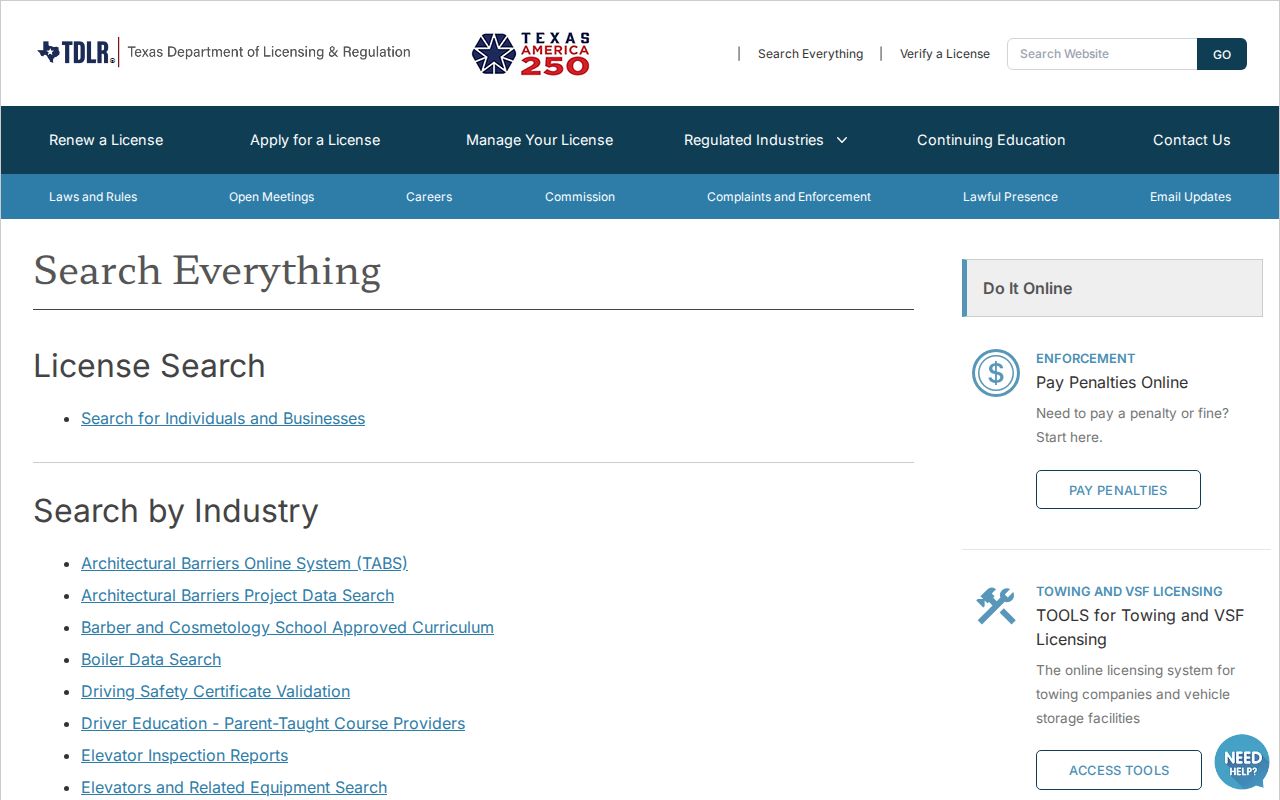
Compare a license result with an independent Travis record and retain the license date or status, rather than treating the listing as a current location record.
Texas SOSDirect can search entities, registered agents, officers, directors, members, managers, general partners, and filing history. The published search fee is $1, and an account or temporary login can be required. A company office or registered-agent address is an entity filing field, not a person's home address.
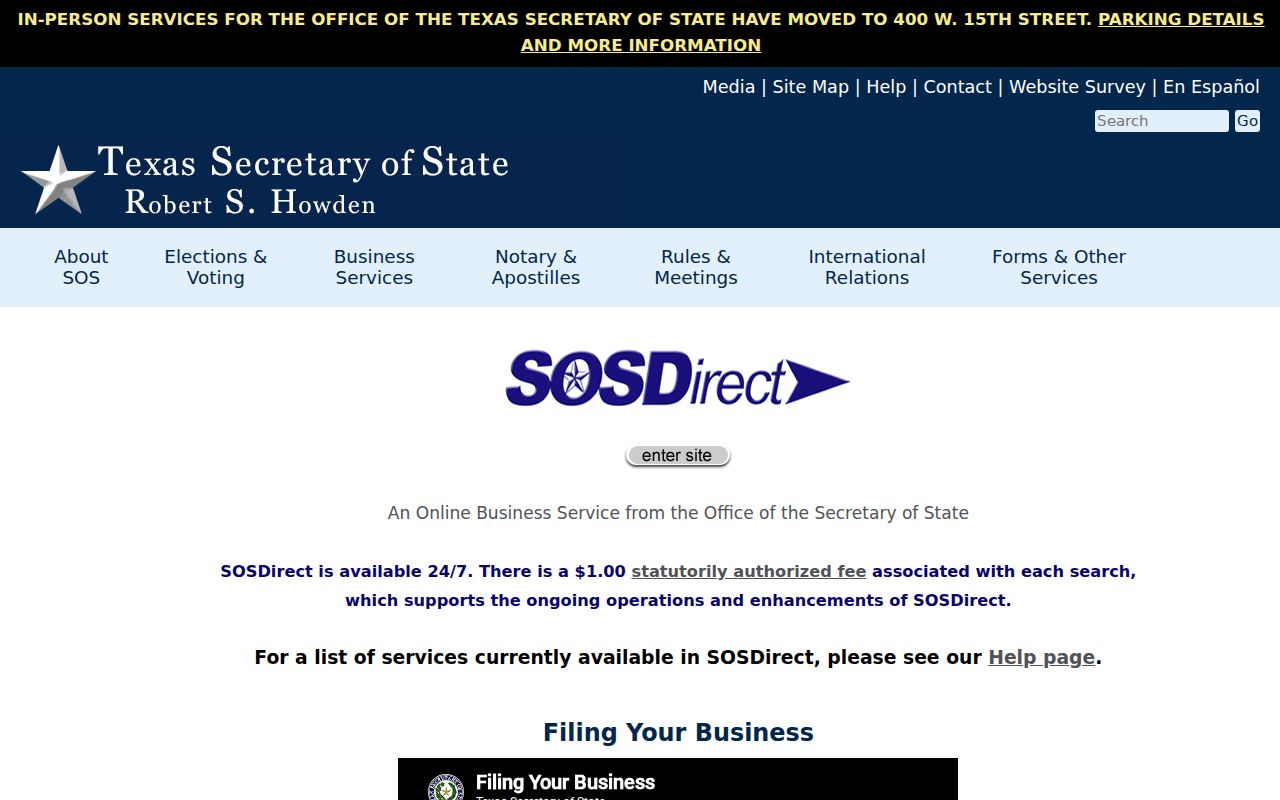
Business data can corroborate a dated organization role while leaving the person-versus-record distinction intact.
Travis Custody Record Snapshots
A current custody search is a time-limited status record, not a court disposition or a residence record. Travis County Sheriff and Texas Department of Criminal Justice systems are separate custodians and can omit protected or juvenile material. When a state custody result has a similar name, compare the identifying details with a separate official record and the relevant date. Do not use a result to infer facts that the record does not display.
The Texas Department of Criminal Justice offender search supports name, SID, TDCJ number, partial or wildcard searching, prior-number searching, and a details view.
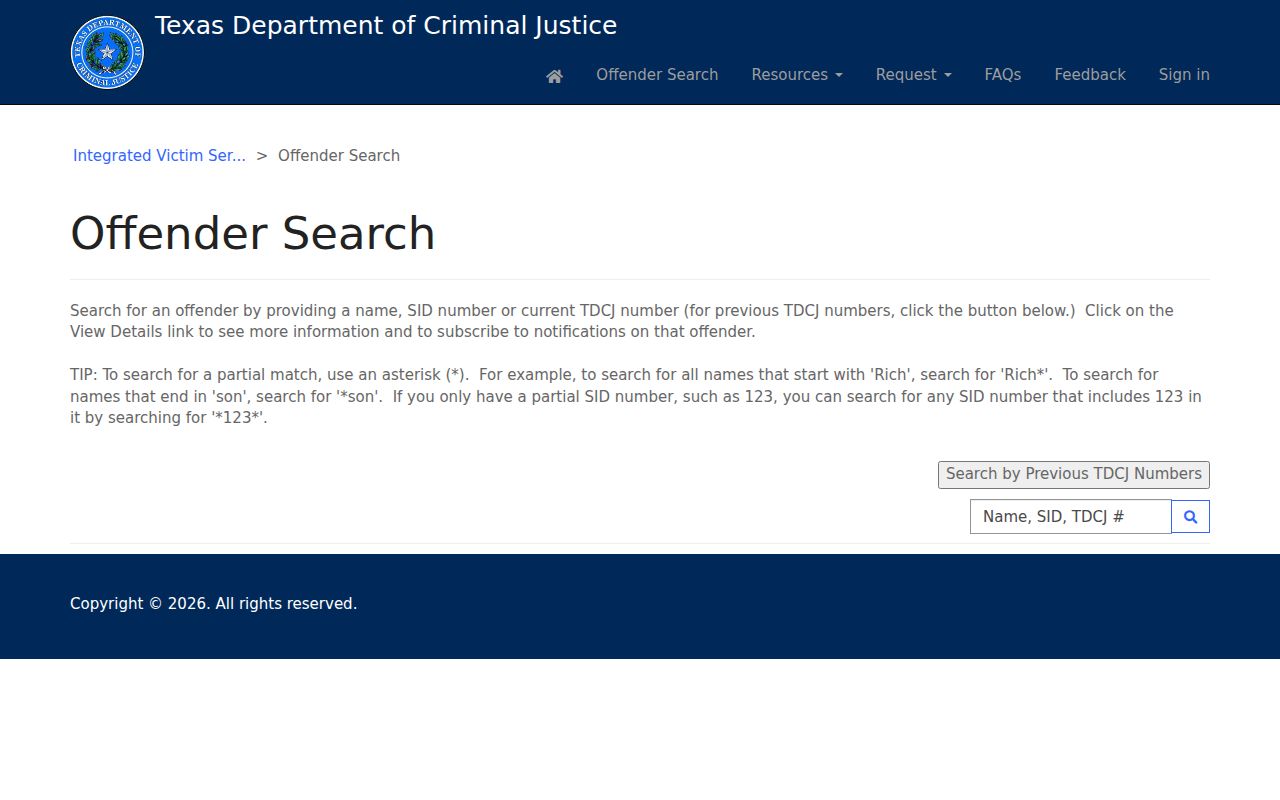
The state result belongs to a statewide custody system, so it must not be presented as a Travis address or as a final court outcome.
Travis Court Portal Layers Compared
Travis court research has a useful division of labor. Odyssey lets a searcher choose County Clerk, District Clerk, Probate Court, or all locations in a single county-facing search. The District Clerk's own coverage starts later for the stated family, civil, and criminal online categories. Austin Municipal Court requires its own name-plus-identifier search. Federal matters require PACER. That routing difference is a local safeguard against treating a no-result in one portal as a countywide no-result.
| Portal layer | Best use | Limit |
|---|---|---|
| Odyssey | County Clerk, District Clerk, and Probate location choices | Index and document access can vary by case and division |
| District Clerk portal | Described online district family, civil, and criminal coverage | Older records need clerk or archival routing |
| Austin Municipal Court | City ordinance, traffic, parking, and related municipal matters | Does not replace county, district, or federal search |
For a historical household trail after identity work is complete, dated volumes and address evidence belong on the Travis city directories page rather than in a current court search.
Travis Records Lookup Fallbacks
When an online result is incomplete, ask the custodian for the existing record rather than asking an office to create a resident list. The Travis County Law Library court guide helps route County Clerk, District Clerk, justice court, municipal, and federal records. District civil and family records can be routed to 1700 Guadalupe, Room 3.200, with the listed civil and family phone number of (512) 854-9457. Felony records use the Gault Annex at 501 W. 11th Street, Room 2.300, with the listed criminal number of (512) 854-9420. County and district clerks offer counter, copy-request, mail, and public-information routes.
Austin Municipal Court accepts its judicial-record request form through CourtJIR@austintexas.gov and lists (512) 974-4800 for court records. Request the case number, party, division, date, document type, and certification when known. For older local court, probate, deed, or naturalization material, Archives and Texas State Library microfilm can supply the next layer.
For a vital event, use the correct local registrar first. DSHS accepts online, mail, local, and in-person applications for its routes; the County Clerk's historical forms can be mailed, and Austin has its eligible local route. Texas Public Information Act requests under Government Code Chapter 552 should identify the department, existing record type, name or date range, and desired format. The County Clerk public-information request route accepts email, mail, and in-person requests for records it maintains. It does not require the Clerk to answer a question, perform research, or build a new database. Vital requests remain subject to their separate eligibility rules even when an index is available.
Travis Resident Lookup Privacy Stops
Stop when a record is sealed, expunged, juvenile, adoption-related, mental-health protected, or withheld through a voter confidentiality program. Do not republish Social Security numbers, driver-license information, substitute addresses, or sensitive identifiers that appear in an old scan. Corrections and redaction questions go to the custodian: TCAD for appraisal data, the County Clerk for recorded instruments, court clerks for court indexes, SOS or the county registrar for voter data, and DSHS or a local registrar for vital records.
Lawful use. Use Travis records for lawful personal research and stop when privacy protections apply. Texas law does not permit public records to be used to threaten, follow, intimidate, or harass another person.
For a street-wide question after a person and address have been separated carefully, use the address-focused Travis residents by street resource instead of extending a one-person match beyond what the record supports.
Note: Public availability never overrides a custodian's redaction, a confidentiality program, or the limited purpose of the underlying record.