
Travis City Directory Collections by Access
Austin History Center is the main local shelf for historical directories used in Travis research. Its holdings separate normal alphabetical volumes from reverse, telephone, countywide, and annual collections. The distinction matters. An alphabetical book starts with a name, while a criss-cross volume starts with an address. Selected volumes are available online, but a missing web result can mean that the year was never digitized or that the run has a gap. Treat each source as a dated record with its own coverage.
| Collection | Years | Where Held | Access |
|---|---|---|---|
| Austin city directories | 1872 to current, with gaps | Austin History Center | Reading room; selected years online |
| Digitized Austin volumes | 1872-73, 1877-78, 1881-82, 1885-86, 1889-90, 1897-98, 1906-07, 1912-13, 1918, 1922 | Portal to Texas History | Read online; many pages downloadable |
| Criss-cross directories | 1957 forward | Austin History Center | Onsite or library-guided use |
| Telephone directories | 1905 forward, with gaps | Austin History Center | Historical reference collection |
| Travis County directories | 1894-95, 1898-99, 1901, 1954-62, 1972 | Austin History Center | Countywide historical reference |
The city-directory run reaches broadly across Austin history, but it is not uninterrupted. The countywide books are much sparser. Telephone listings also leave out people who did not have a listed service. For people outside Austin, a Travis County directory, deed, tax roll, or map may be the better starting point. The Austin History Center biographical guide identifies the runs and its database access conditions.
Digitized Travis City Directory Volumes
The Austin Public Library directory collection points researchers to the selected Austin volumes hosted by Portal to Texas History. They range from the early 1870s through 1922, with gaps between the posted years. Portal records can be read in a browser and often offer page-image or PDF download. Save the volume year and page number with any entry, because a name alone is rarely enough to separate people with the same surname.
The 1889-90 Morrison & Fourmy Austin directory is a detailed surviving snapshot. Its 266 pages include resident names and addresses, occupations or pursuits, government, societies, churches, and business listings. It remains a publication record from its compilation period, so it should not be read as a complete count of everyone then in the city.

The digitized volume makes its page structure visible, which is useful when a spelling, street form, or category needs to be cited exactly.
A separate library collection view is useful for confirming which years have a remote copy before planning a reading-room visit.
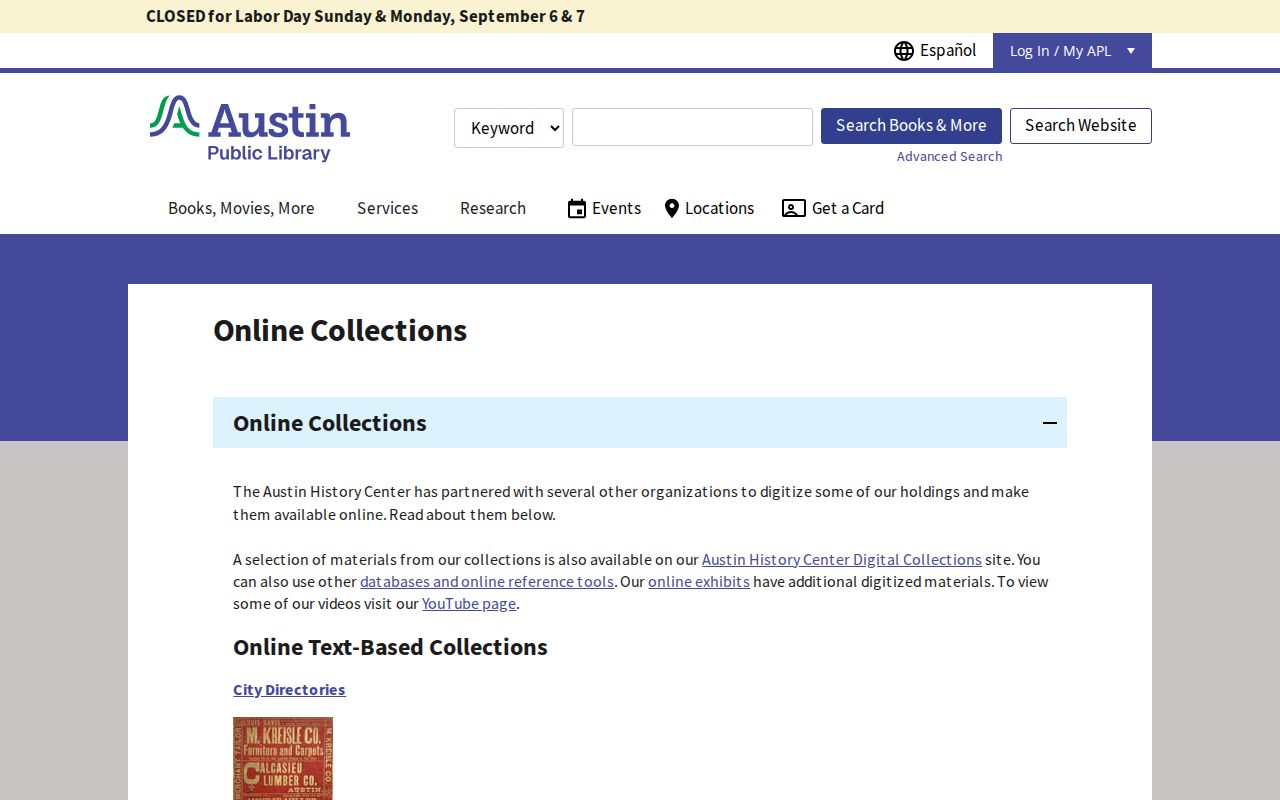
Use the online set as a starting shelf, then move to the local run when the desired year is absent.
Travis Criss-Cross Directories by Address
For an address-first question, the Austin History Center's criss-cross directories are the relevant branch of the collection. They begin in the listed 1957 period and can turn a street address into an occupant or subscriber lead. That is different from a deed index, which tracks recorded parties, and different from an appraisal card, which tracks an owner or mailing contact. A criss-cross listing remains an annual snapshot and may have gaps, non-listings, or an older street form.
The Austin History Center collections include directories, maps, house files, newspapers, yearbooks, and manuscript material. A reverse lookup can be followed by the normal alphabetical entry for the same year, where an occupation, spouse notation, or publication-status clue may appear. That pairing is stronger than relying on one short line of print.
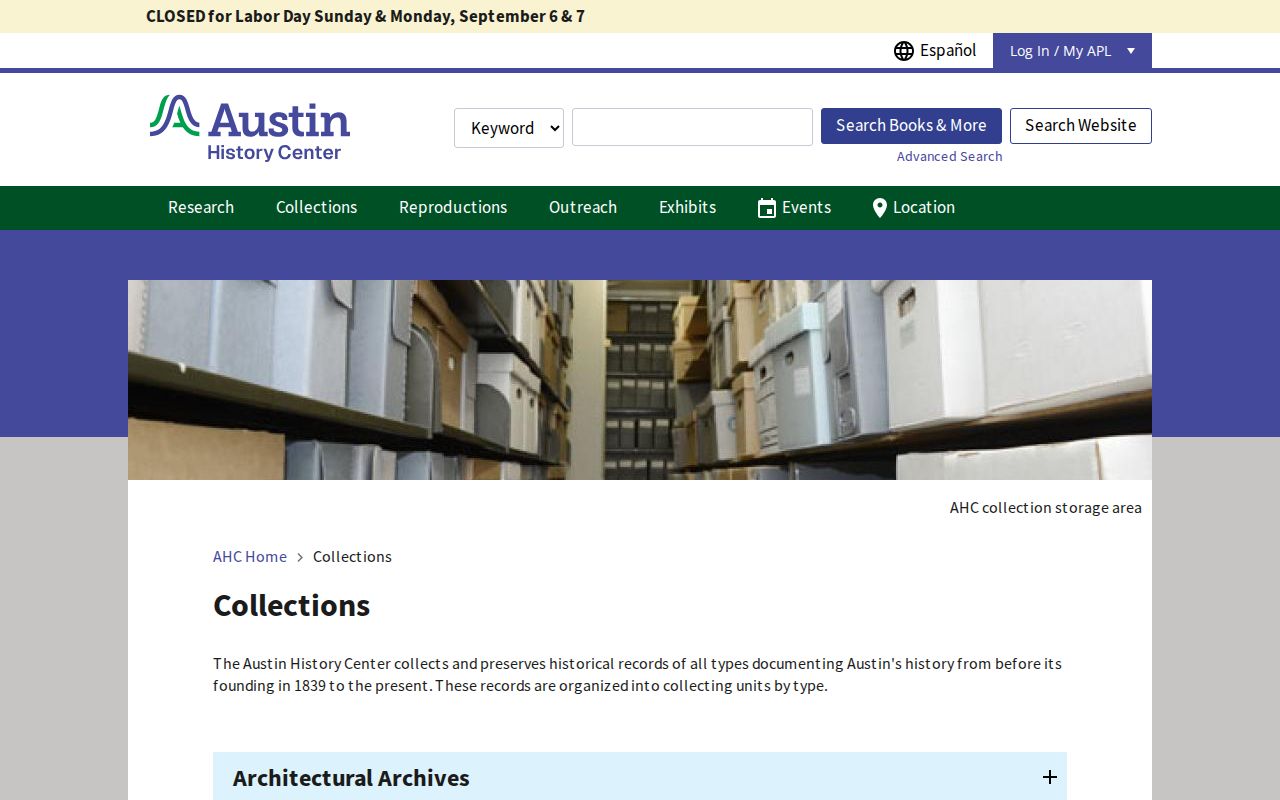
The collection route also creates a practical bridge from an address listing to maps and address-organized house material.
Note: A directory association identifies a dated listing, not a guarantee of title, occupancy, or a current address.
Read a Travis City Directory Entry
A city directory entry needs to be read as a compact publishing convention, not as a modern profile. Morrison & Fourmy entries can supply a full name, a printed street address, and an occupation or pursuit. Later Austin books may add a status notation and a spouse in parentheses. The directory's organization, business, government, society, and church sections can also offer a route to a dated community source. Photograph or transcribe the volume title, publication year, page, and abbreviations before comparing the entry to another record.
| Resident name | Printed name used by the publication; check initials and spelling variants. |
|---|---|
| Street address | The address as printed for that year, subject to later street or number changes. |
| Occupation or pursuit | A dated descriptive clue that can help distinguish similar names. |
| Spouse notation | A spouse may appear in parentheses in later entries. |
| Status notation | Later entries can carry a notation that should be checked against title records. |
- Criss-cross directory
- A reverse directory arranged from street address to an occupant or subscriber lead, rather than from name to address.
- Householder index
- An address-oriented or household-oriented finding aid that helps connect a property to a listed head of household.
- Abbreviation key
- The volume's explanation of its shortened terms and marks. Read it before treating a printed notation as a fact.
A missing listing has several possible meanings. A person may have moved, been omitted, used a variant name, or lacked a listing of that type. Check a nearby directory year and the alphabetical and reverse portions before deciding the trail ends.
Travis Directory Years and Gaps
The directory shelf has useful landmarks, but its gaps are part of the evidence. Austin directories extend from 1872 to current with gaps. The earliest cited street-list cross-reference begins in 1905, so an older volume may not support a quick address-to-name search. A missing directory result before that point can call for an owner-first or lot-and-block approach instead.
- 1872: the listed Austin city-directory run begins, although not every year survives or is held.
- 1889-90: Morrison & Fourmy provides a detailed digitized Austin snapshot.
- 1905: the first identified Austin street-list cross-reference appears.
- 1957: the listed criss-cross run begins at Austin History Center.
Telephone directories start in 1905 with gaps, and Travis County volumes exist only for selected years. Those limits are a comparison point, not a defect. A date mismatch may reflect the collection's schedule rather than a person leaving the county.
Trace Travis City Directories Across Households
A household trail works best when the directory years are paired with census and record dates rather than read as a single sequence. Austin History Center's property guidance recommends starting in the mid-1970s for address research, finding the address, and then working backward. When a name changes address, preserve both printed forms. A deed can show a title transaction, while a directory can show that a publication associated a person with an address in a particular year.
- Find the earliest usable name or address entry and save its exact year and page.
- Follow the listing forward and backward through available volumes, noting spelling, spouse, occupation, and street changes separately.
- For the 1957-forward period, check a criss-cross volume by address and compare its result with the alphabetical entry.
- Pair the directory run with the applicable federal census schedule through HeritageQuest or another documented collection, keeping the census date distinct from the publication date.
- Use a deed, tax roll, map, obituary, cemetery ledger, or house file to test an address change or an apparent disappearance.
The library's HeritageQuest route includes federal census material, histories, PERSI, and primary sources. Ancestry Library Edition is limited to a library computer. A directory line and census household can reinforce each other, but neither removes the need to check the year, spelling, and street history.
Travis Address History Requires Comparison
Historic Travis research can break when an address is searched only in its modern form. Austin's early plan used Water Avenue, First Street appeared in 1887, and the street later became César Chávez Street in 1993. At the time of the 2026 research, the City of Austin described a current public-feedback process about a potential street-name change. Preserve the older name and the relevant date when checking books, deeds, maps, or newspapers.
The same comparison applies to numbering and jurisdiction. Downtown east-west tree names changed to numbered streets around 1897-98, and later Austin annexations can affect which office has supporting material. The Austin Street Name Database covers active and reserved Austin and Travis County names. It is a research aid, not proof that every historic label maps cleanly to one current address.
Travis City Directory Research Routes
When a web copy stops, the access route widens. Austin History Center offers reading-room research, online collections, TARO finding aids, Portal to Texas History, and remote help for short factual questions. Its research page identifies HeritageQuest through the library's remote login route and limits Ancestry Library Edition to a library computer. Longer directory, map, or house-file work belongs in the reading room, where staff and collection tools can help identify the exact volume or box.
The Texas State Library Travis County microfilm guide adds selected courthouse reels for older records. Its microfilm is a companion to the directory shelf, especially when an address needs a deed, probate, marriage, or naturalization context.
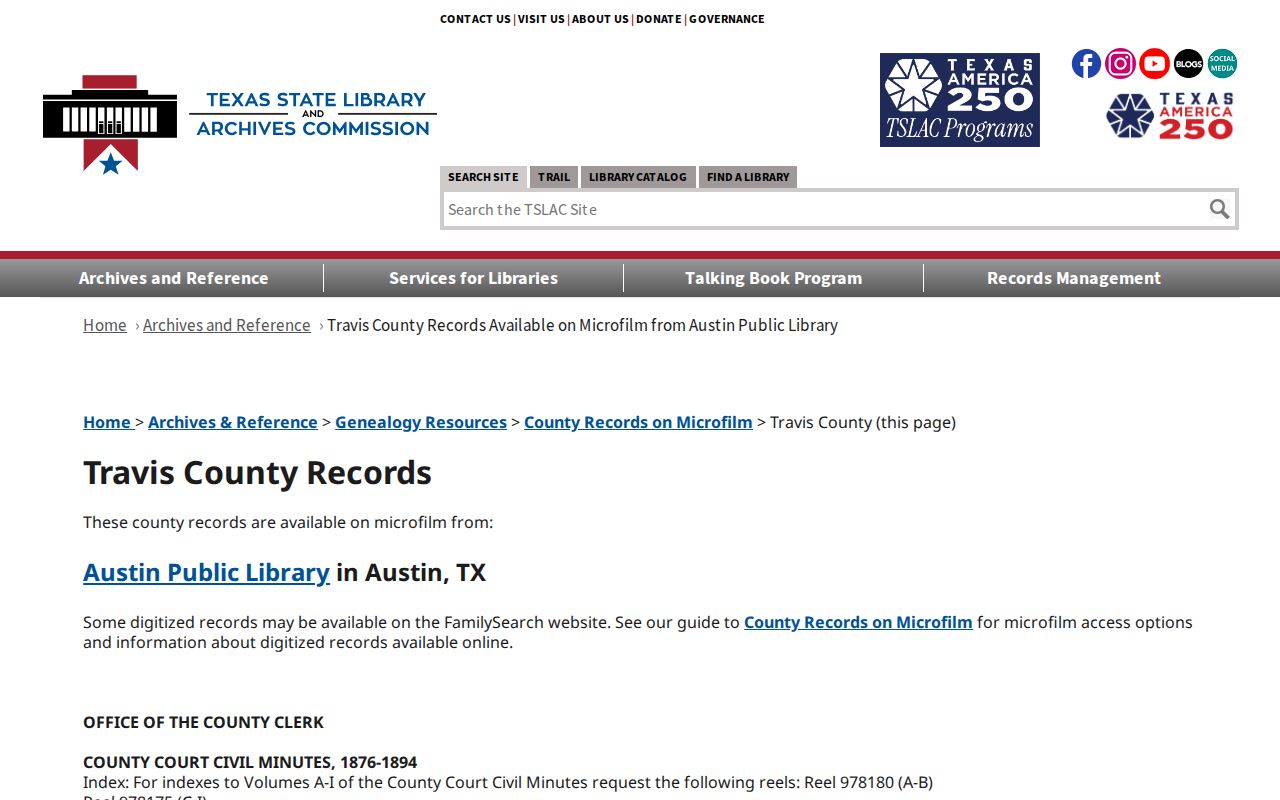
A reel or shelf reference gives a reproducible next step when a digitized city directory does not cover the needed year.
The Travis County genealogy resources identify historical tax rolls, land registers, city lot registers, court and deed books, and archival contacts. Travis County Archives is at 5555 Airport Boulevard, Room 507, by appointment, and reports no-fee searches and copies at the time of research. It is a key fallback for older books and microfilm.
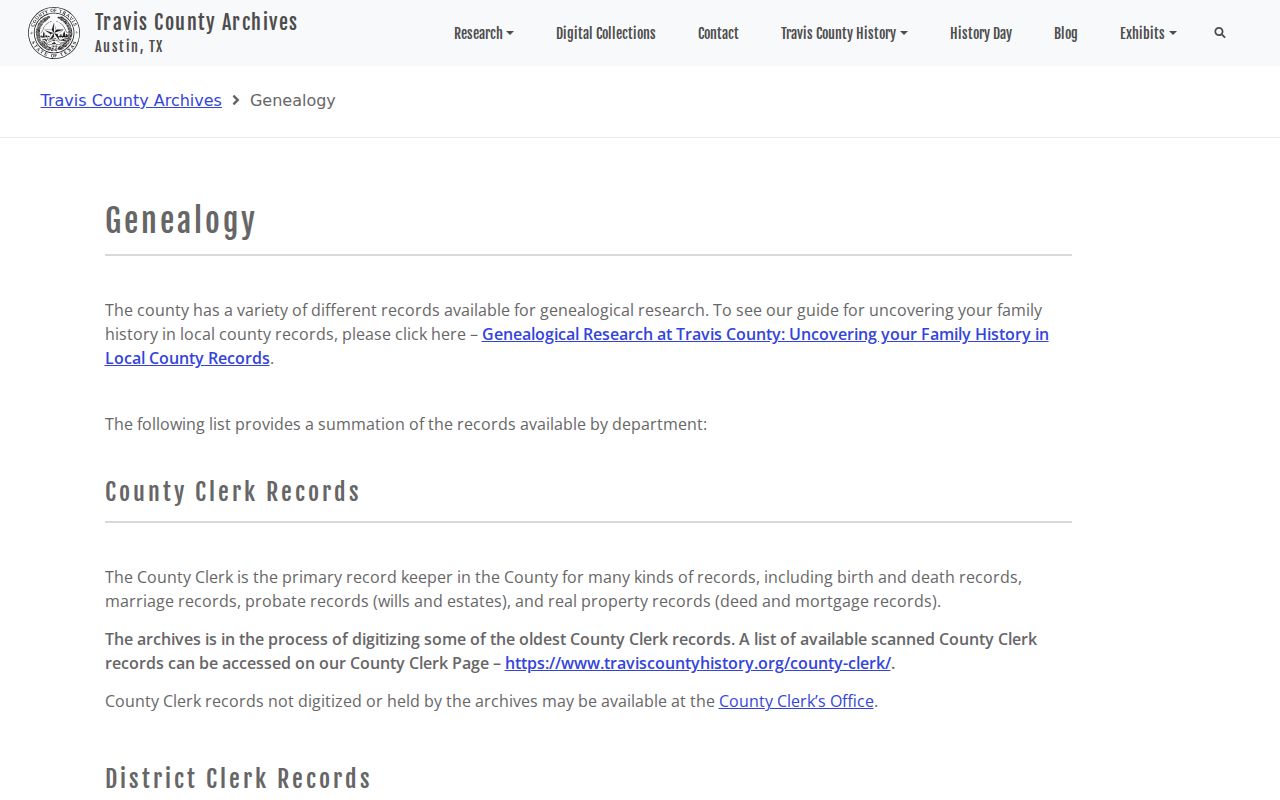
Archive assistance can fill the gap between the modern online record systems and the oldest printed or handwritten material.
Travis City Directories and Companion Records
Directory research becomes more reliable when it is checked against a second local source. Austin History Center holds Cactus annuals from 1894 forward with gaps, school annuals with year-specific gaps, church and social-club directories, house files, maps, newspapers, and manuscript collections. The Austin American-Statesman microfilm runs from 1871, but it is chronological rather than name-searchable, so a death date or approximate event date helps locate an obituary.
Historical tax rolls span 1840-1995, land registers 1877-1936, and city lot registers 1879-1974. These records can connect an owner, lot, and year when a directory cannot. House files are arranged by street address and may hold photographs, permits, architectural notes, maps, ownership leads, or preservation research. Most are not digitized, so request the exact address and any historic street name in the reading room.
Note: A publication, tax record, deed, or house file answers a different question, so preserve its source type and date beside every finding.